
START HERE / STAR CLUSTER BALL
What Is Star Cluster Ball? Table, Balls & How It Works
Discover what Star Cluster Ball looks like on the table, how a push changes the positions, and which rules to check before your first game.
QUICK RULES
Star Cluster Ball at a glance
This describes a publicly documented tabletop version. Check the rules of the event you are watching or entering.
- Players
- Two players or teams use different ball colours; red and black are common in published footage. Reported
- Table
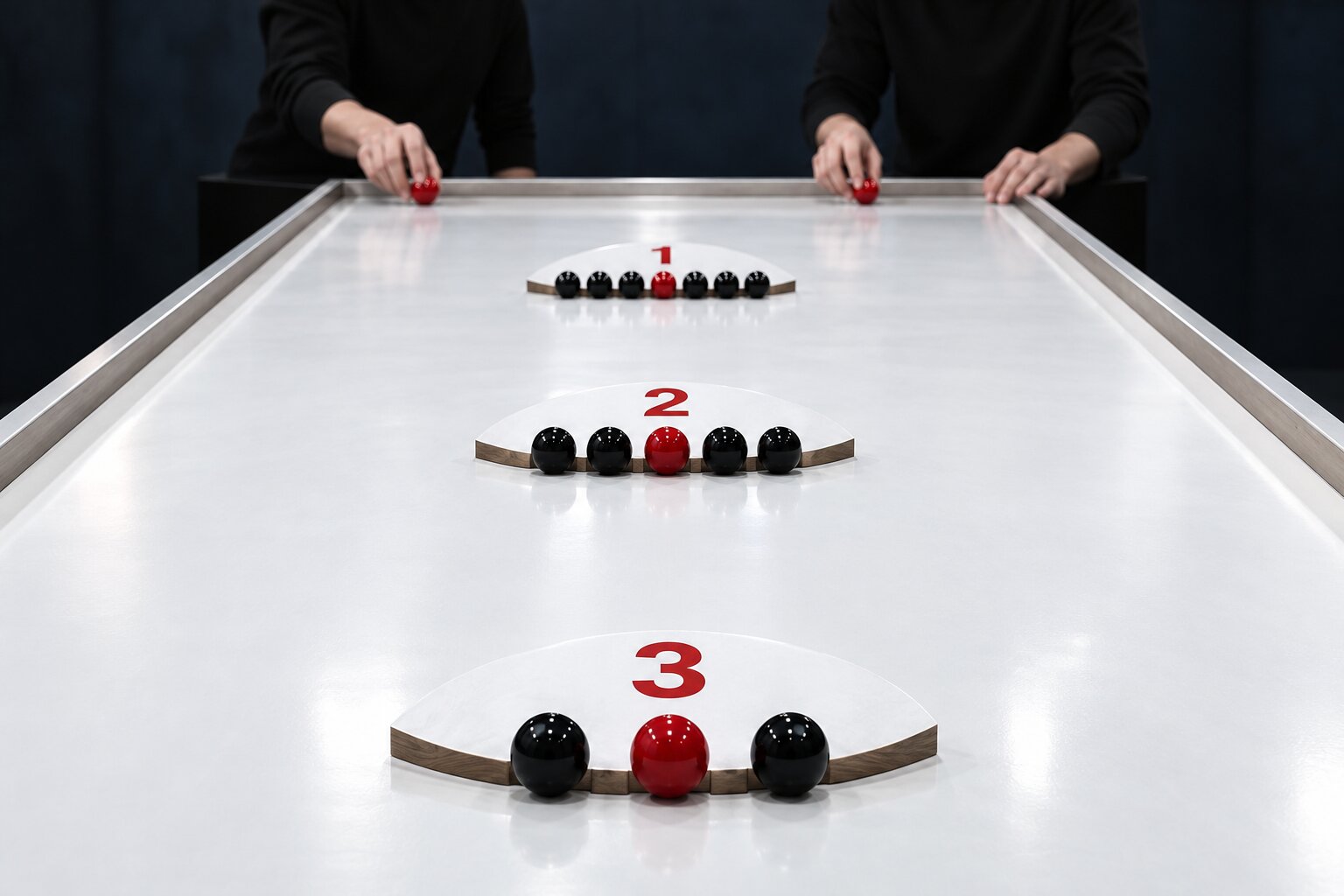
- Push from one end toward three target plates. A public overview describes 7, 5 and 3 positions. Reported
- Aim
- Place your balls in valid positions and finish with more points than the other side. Core play
- Release
- Push from the permitted release area; the event defines its boundary. Core play
- Base score
- One published version awards 1, 2 and 5 points per ball in plates 1, 2 and 3. Version example
- Check locally
- Turn order after scoring, bonuses, fouls, match length and table dimensions. Unverified
01 / START HERE
Star Cluster Ball in one clear idea
Star Cluster Ball is a tabletop game of deliberate pushes and changing positions. A player sends a ball across a dedicated playing surface toward structured target plates. The immediate result matters, but so does the arrangement left behind for the next shot. When you first watch a match, forget the more complicated scoring language for a moment. Watch where a ball begins, which route it follows, and where it comes to rest. Those three observations explain much of the action.
Public match images usually show two easily distinguished ball colours, three target plates and raised side rails. They do not, by themselves, establish one universal way to score every event. A useful starting description is precision plus ongoing positional decisions. Precision helps a player reach an intended area; position determines whether that arrival makes the following choice easier, harder or more interesting for either side. The game becomes clearer as you follow several shots rather than judging one in isolation.
02 / START HERE
How one table creates a contest
The table is more than a flat place to roll a ball. It supplies a continuous surface, a defined playing boundary and target areas whose positions can be read by players and spectators. One published Chinese overview describes three semicircular plates with seven, five and three positions respectively. That describes a commonly shown layout, not a guarantee that every table or event uses an identical specification. Side rails frame the action and can affect how a ball travels. Ask an organizer about the actual table before applying a written guide to a competition.
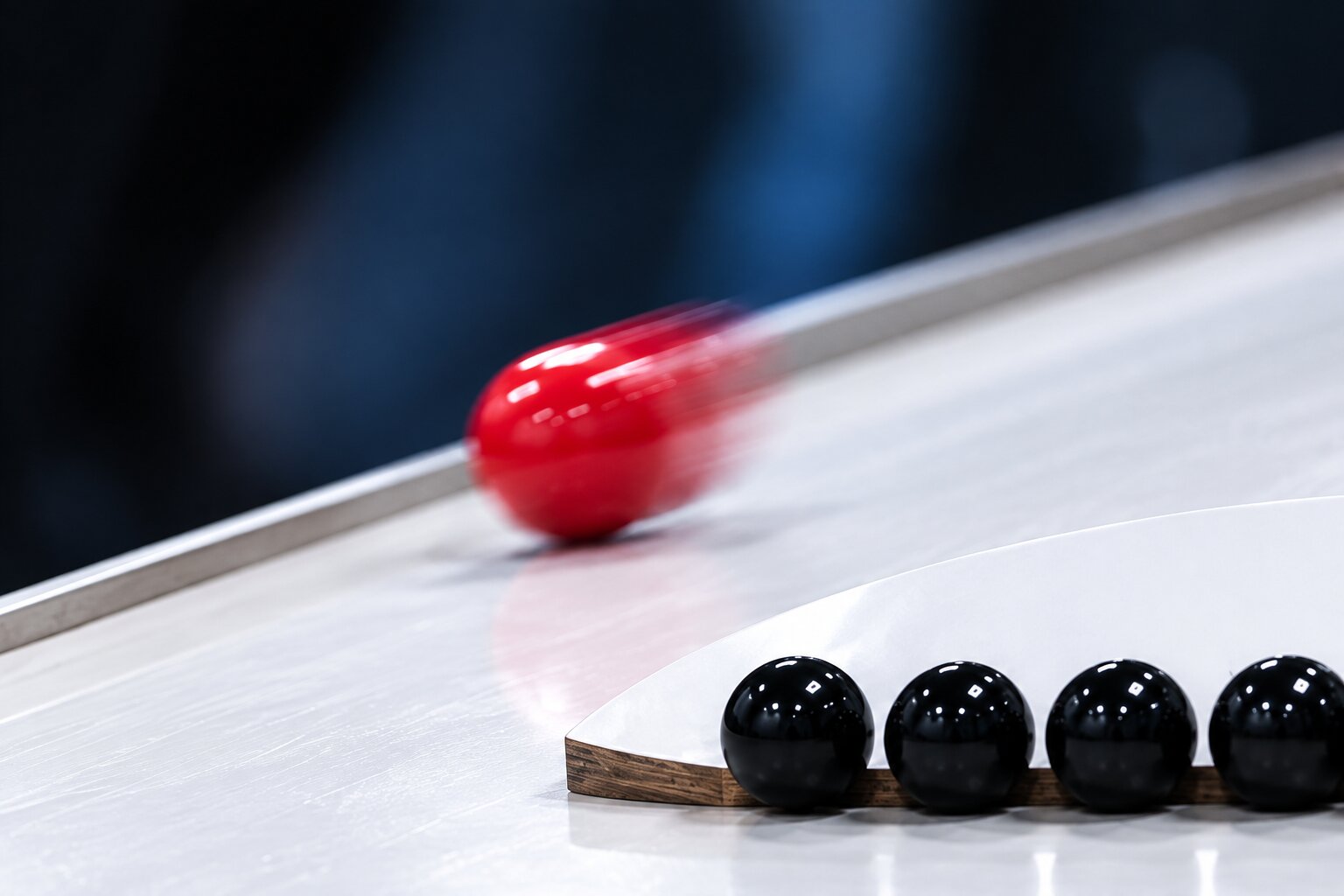
Read the playing area in three layers. The first is the release: where may a player place a ball, and what line must they stay behind? The second is the journey: how does the ball travel in relation to the surface, the rails and balls already in play? The third is the outcome: does the new ball settle in a target, stop elsewhere, displace another ball or leave the active area? Separating these stages turns an apparently surprising result into a sequence you can explain.
03 / START HERE
Why small balls create many choices
Every push combines direction, pace and intended resting place. Direction determines the lane. Pace affects whether the ball reaches a target, stops short or carries too far. The final position changes the options available on the next turn. A nearby plate may be blocked by an opponent’s ball, while a more distant plate may have a clean route. This is why “always aim at the highest score” is usually a poor account of the decisions visible on a real table.
Balls can also affect one another. A later shot may shift a ball already at rest or itself be stopped by a crowded position. A useful shot can therefore do more than claim an immediate point: it may occupy an important place, narrow an opponent’s comfortable lane, or leave a safer path for the player’s next attempt. An apparently profitable shot can have the opposite effect if it worsens the later position. Those trade-offs are an important part of the game’s appeal.
04 / START HERE
A simple way to watch your first match
New viewers often follow the moving ball but lose track of the pattern once it stops. Try watching only one colour for three to five releases. Note which target each shot appears to pursue, where the ball actually settles, and whether a similar lane is still available afterward. Then add the opposing colour: did the opponent close that lane, create a new opening, or alter a target plate? This exercise reveals a conversation between the two sides that a score graphic alone cannot show.
When watching a recording, pause after a ball settles and ask three questions. Which target positions remain open? Which player has the easier next route? Would you seek an immediate score or change the arrangement first? You do not need to predict the actual player correctly. The value of the exercise is making your own reasoning explicit, then comparing it with the real response. Our video pages link to match footage and offer viewing prompts; any scoring shown belongs to the format of that particular recording.
05 / START HERE
Your first try at the table
An impressive match shot is a poor first lesson if you cannot yet repeat a simple push. Ask the organizer to identify the release area, active targets, boundaries and local rules. Choose one visible target region and attempt several similar shots. Notice whether your ball regularly veers to one side, stops before the intended area or passes beyond it. Change one variable at a time: first correct direction, then adjust pace. If both change dramatically together, it is hard to tell which adjustment helped.
A small practice task gives better feedback than an ambitious score target. For example, try to settle three balls near the same plate. If the results become more closely grouped, your action is becoming more repeatable. If the same error keeps returning, you have a specific thing to investigate. With a partner, state your intended route before each release and describe what happened afterward. That conversation builds awareness of choice, not just a count of successful balls.
06 / START HERE
How to read claims about scoring
Chinese-language summaries describe ideas such as base scores, chains, full plates and timed halves, yet publicly available explanations do not always agree on the exact bonuses or special cases. Some pages also compare Star Cluster Ball with similarly named tabletop activities. Separate what a recording shows from what a rules document must establish. You can often see where a ball lands and how many positions are occupied. You usually cannot infer the correct point award, continuation of a turn or treatment of a collision without the event’s chosen format.
Before a session, ask six practical questions. Where is the release line? Who begins? Which positions are active? How are base and bonus points calculated? What happens when a ball stops outside a target or leaves the playable area? How do time limits and ties work? A brief local rules card answering these questions is more dependable than memorizing a generic online summary. Our rules articles explain concepts and useful checks, without presenting an unverified format as a worldwide standard.
07 / START HERE
How this differs from an ordinary marble game
“It uses small balls” is too broad to describe the sport. Public footage shows balls deliberately pushed along a defined table toward structured positions while two sides respond to an evolving layout. The interest lies both in the hand’s control and in the next decision created by that control. A clear image of three target areas and two ball colours usually tells a new viewer more than a loose comparison with simply rolling marbles for distance.
Comparisons with curling, billiards or other precision games can be useful introductions to pace and position, but they should not replace the actual rules. The table, legal actions and score treatment may differ. If you want to know whether a local activity matches the match you watched online, inspect the table and target plates, ask how the balls are used, and read that organizer’s published format. Similar movement does not imply identical competition rules.
08 / START HERE
Where the fun comes from
A ball finding a target offers immediate satisfaction. Across a whole match, the stronger appeal is often reversal. A player who appears comfortably placed may have their route narrowed by a reply. An open lane can vanish after a single new ball settles. A less obvious target can suddenly become attractive. Pausing at each settled position to predict the next choice lets a spectator participate intellectually, even before every scoring detail is familiar.
The action also stays within a compact, visible space, so friends can stand nearby and discuss it. A beginner might ask why a ball travelled too quickly; a practiced player may ask what angle remains for the following shot. One arrangement supports both questions. That makes an introductory session and a more analytical replay rewarding in different ways. Whether a particular club welcomes beginners, provides instruction or supplies equipment is a local question to verify with the host.
09 / START HERE
What to verify when learning a new sport
Search results may give different translations, table measurements, materials, event formats and supposedly official rules. Examine who published each claim and whether it points to an identifiable event, equipment maker or match recording. Footage can establish that a certain table and movement were used; it cannot prove that every event scores the same way. A secondary explainer can be a useful map, but it is not a substitute for a competition rulebook. Dimensions, prices, records and club schedules are particularly sensitive to place and time.
We separate information into three groups: visible equipment and actions, concepts repeated in public explanations but still worth checking, and details controlled by a particular event. You will see that distinction in the rules section, alongside source links where available. If this site’s general introduction differs from the match you are joining, follow the organizer’s published version. A publicly shareable rule document would also let us improve the accuracy of future editions.
10 / START HERE
Where to go next
For a quick mental model, remember four clues: a dedicated table, two distinguishable ball colours, three target plates and a position that changes after every release. You can then read the beginner guide to understand the release area and first controlled push. Alternatively, watch a complete match while following one colour, pausing after a settled ball and guessing the next choice. Once the table begins to make sense, return to the rules and equipment guides for the details that matter to your own session.
When you finally stand at a table, treat what you learned online as preparation rather than a referee. Confirm the equipment, scoring, turns and safety expectations on site, then begin with one repeatable push. The attraction is not performing an elaborate combination immediately. It is discovering that a small resting position can change the next decision and start a new exchange between two players.
SOURCES & MORE
Shoushai overview of equipment and reported rules ↗